Manikarnika Ghat — The Eternal Flame of Kashi
- Home
- Manikarnika Ghat — The Eternal Flame of Kashi
Manikarnika Ghat — The Eternal Flame of Kashi

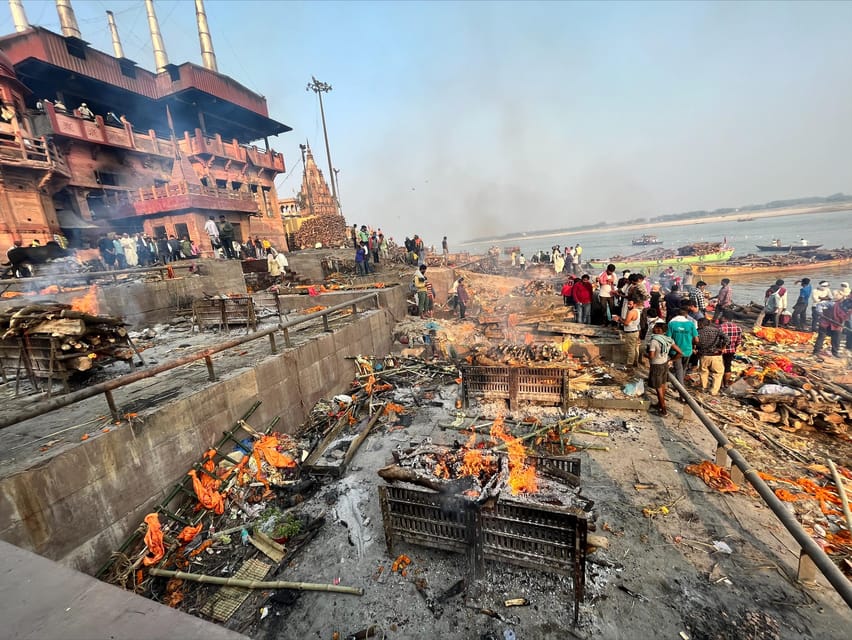
On the sacred banks of the Ganga River in Kashi (Varanasi) stands a place where the truths of life and death are witnessed every moment of the day—Manikarnika Ghat. Known as the most revered cremation ghat in India, Manikarnika is not a place of sorrow alone; it is a gateway to liberation, a site where faith in moksha becomes a lived tradition.
For centuries, families from across India have brought their departed loved ones here for the final rites, believing that cremation at Manikarnika frees the soul from the endless cycle of birth and rebirth.
The Meaning Behind the Name “Manikarnika”
The name “Manikarnika” comes from two Sanskrit words: Mani (jewel) and Karnika (earring). According to legend, while Lord Shiva and Goddess Parvati were present in Kashi, an earring of the goddess fell at this very spot, creating a sacred kund (pond). This pond, known as the Manikarnika Kund, is still present near the ghat and holds immense religious significance.
The Ghat Where the Pyres Never Extinguish
Manikarnika Ghat is famous for its eternal funeral pyres. It is said that the fire here has been burning continuously for thousands of years. Day and night, cremations take place without pause. This uninterrupted flame symbolizes the continuous cycle of life, death, and spiritual liberation.
Unlike ordinary cremation grounds, Manikarnika is considered a Mahashmashan—the great cremation ground blessed by Lord Shiva himself.
Why Cremation at Manikarnika is Considered Auspicious
Hindu scriptures describe Kashi as the city where Lord Shiva personally grants the Taraka Mantra to the departing soul. Cremation at Manikarnika, followed by Asthi Visarjan in the Ganga, is believed to ensure moksha.
Families believe that performing the last rites here:
- Liberates the soul from karmic bondage
- Brings eternal peace to the departed
- Removes ancestral doshas (Pitru Dosha)
- Fulfills the highest duty toward one’s ancestors
Connection with Lord Shiva and Kashi Vishwanath
Manikarnika’s spiritual power is closely linked with the presence of Lord Shiva in Kashi. After the cremation rituals, families often proceed to the sacred Kashi Vishwanath Temple to pray for the salvation of the departed soul. This connection between the ghat, the Ganga, and Kashi Vishwanath completes the sacred journey of the last rites.
The Rituals Performed at Manikarnika Ghat
The last rites at Manikarnika follow strict Vedic traditions conducted by experienced pandits and the Dom community, who have preserved this sacred duty for generations.
The process includes:
- Bringing the body to the ghat with chants of “Ram Naam Satya Hai”
- Performing the cremation with sacred fire
- Collecting the ashes (asthi) after the ritual
- Immersing the ashes into the Ganga through Asthi Visarjan
- Performing pind daan and tarpan for the peace of the soul
A Place That Teaches the Truth of Life
Visitors to Manikarnika often describe a profound realization: here, the illusions of worldly life fade away. The sight of continuous cremations reminds one of the impermanence of the body and the eternity of the soul. Saints and seekers come here not out of fear, but to understand the deeper truths of existence.
Why People Travel from Across India to Manikarnika
Despite modern facilities elsewhere, families prefer Manikarnika because of:
- Its unmatched scriptural importance
- The eternal sacred fire
- The presence of Maa Ganga
- The blessings of Lord Shiva in Kashi
- Centuries-old uninterrupted tradition
Conclusion
Manikarnika Ghat is not merely a cremation ground; it is a sacred threshold between the physical world and spiritual liberation. It stands as a timeless symbol of faith, devotion, and the ultimate truth of life.
In the heart of Kashi, on the banks of the Ganga, Manikarnika continues to guide countless souls toward peace and moksha, just as it has done for thousands of years.